
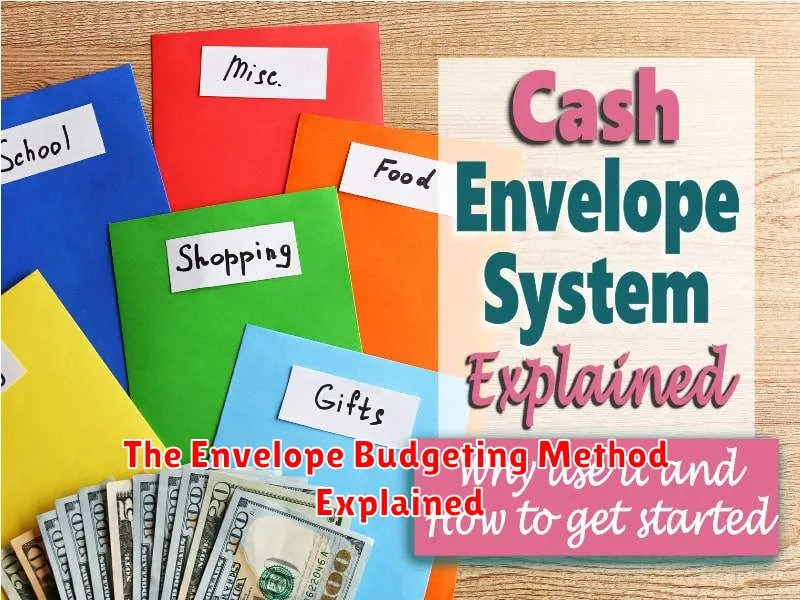
Are you tired of living paycheck to paycheck, struggling to track your expenses, and constantly feeling financially stressed? Implementing a budgeting system can significantly alleviate these concerns, and the envelope budgeting method offers a surprisingly effective, hands-on approach. This tried-and-true method allows for greater financial control and provides a clear picture of your monthly spending. Learn how this simple yet powerful technique can transform your relationship with money and help you achieve your financial goals.
This comprehensive guide will explain the envelope budgeting system in detail, walking you through the steps of setting up your cash envelopes, allocating funds to different spending categories, and monitoring your progress. We’ll explore the benefits of this physical budgeting method, address common challenges, and offer practical tips for maximizing its effectiveness. Whether you’re a seasoned budgeter or a complete beginner, discover how the envelope system can help you gain financial clarity and take control of your personal finances.
What Is Envelope Budgeting?
Envelope budgeting is a cash-based budgeting method that involves allocating your monthly budget into physical envelopes, each representing a specific spending category.
Instead of using credit cards or debit cards for purchases, you withdraw the cash equivalent of your allocated budget for each category and place it in its corresponding envelope. Once the cash in an envelope is gone, spending in that category is finished for the month.
This hands-on approach provides a clear visual representation of your spending and helps you stay within your budget. The physical act of taking cash from an envelope reinforces the reality of spending your money.
The simplicity and tangible nature of envelope budgeting make it an effective tool for those who struggle with overspending or tracking expenses. It removes the temptation of impulse buys with credit cards and provides immediate feedback on spending habits.
While traditionally involving physical envelopes, the concept of envelope budgeting can also be adapted using digital tools and apps that simulate the same process.
How to Assign Spending Categories
The effectiveness of the envelope budgeting method hinges on accurately categorizing your spending. Creating comprehensive and relevant categories is crucial for effective tracking and management of your finances. Avoid overly broad categories; instead, opt for specific and granular ones that reflect your actual spending habits.
Start by reviewing your past bank statements and credit card bills. Identify recurring expenses and categorize them accordingly. Common categories include housing (rent or mortgage), utilities (electricity, water, gas), transportation (gas, public transport, car payments), groceries, dining out, entertainment, personal care, debt payments, and savings. Consider your individual spending patterns – you may need additional categories like clothing, subscriptions, or pet care.
When assigning categories, ensure they are mutually exclusive to prevent double-counting. For example, separating “groceries” from “eating out” provides a clearer picture of your spending habits. Be as detailed as necessary to accurately reflect your expenses. If you frequently purchase coffee, a dedicated “coffee” category might be helpful. Likewise, differentiating between “gas” for your car and “public transportation” allows for a more precise budget.
Regularly review and adjust your spending categories. Your financial situation and priorities can change over time, requiring adjustments to your categories. This ensures your budget remains relevant and effective in managing your finances. Flexibility is key to the long-term success of envelope budgeting.
By meticulously categorizing your spending, you gain a clearer understanding of your financial habits and can make more informed decisions about your budget. This step is foundational to successful implementation of the envelope budgeting method.
Benefits of Tangible Cash Limits
One of the most significant advantages of the envelope budgeting method is the inherent limit it places on spending. By physically allocating a set amount of cash to each spending category, you create a tangible barrier against overspending. When the cash is gone, the spending stops, providing a clear and immediate visual representation of your budget.
This physical constraint fosters a greater sense of awareness regarding your spending habits. Unlike swiping a debit or credit card, where the consequences of spending are often delayed and less immediate, the tangible nature of cash makes you more conscious of each purchase. This increased awareness can lead to more mindful spending and better financial management.
Furthermore, the envelope system promotes a sense of control over your finances. You are not at the mercy of automated payments or hidden fees; instead, you are actively involved in managing your money. This sense of control can be incredibly empowering and contribute to a more positive relationship with your finances. You are actively making choices about where your money goes, rather than passively allowing it to slip away.
Finally, using cash envelopes can provide a significant advantage in terms of impulse control. The physical act of taking cash from an envelope before making a purchase often forces you to pause and consider the necessity of that purchase. This conscious pause can be incredibly effective in deterring impulse buys and sticking to your budget.
How to Do It Digitally
While the envelope system is traditionally a physical method, its principles translate seamlessly to digital platforms. Numerous apps and spreadsheets can help you manage your budget digitally, offering similar benefits with added convenience.
Spreadsheet Software: Programs like Microsoft Excel or Google Sheets allow you to create a customized budgeting system. You can allocate funds to different categories, track your spending, and monitor your progress visually. This provides a high degree of control and customization. The ability to easily create formulas for automatic calculations and generate charts is a significant advantage.
Budgeting Apps: Many mobile apps are designed specifically for budgeting and financial tracking. These apps often offer features like automated transaction importing, expense categorization, and visual representations of your spending habits. Some apps even allow you to set budget alerts and goals, providing helpful reminders and insights into your financial health. Choosing the right app depends on your specific needs and preferences.
Online Banking Tools: Many online banking platforms now incorporate budgeting tools directly into their interfaces. These tools frequently link directly to your bank accounts, automatically categorizing transactions. They might provide simple visual summaries or even more in-depth analysis of your spending patterns. This integrated approach offers convenience, especially for those already using online banking regularly.
Regardless of your chosen digital method, the core principle remains the same: allocate your income to specific categories, track your expenses within those categories, and monitor your progress to ensure you stay within your allocated budget. The digital tools simply provide a more efficient and often visually appealing way to manage the process.
Track Leftovers and Rollovers
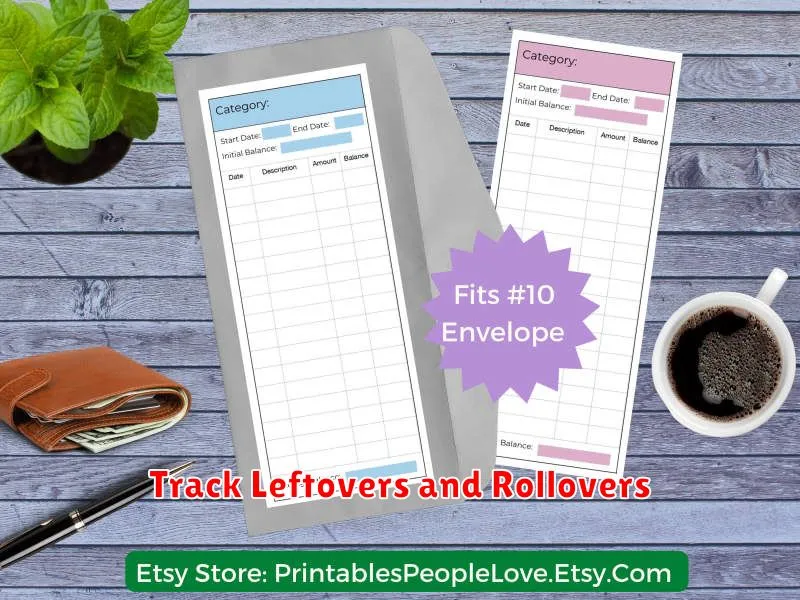
A crucial element of the envelope system is diligently tracking your leftovers and rollovers. Leftovers represent the funds remaining in an envelope at the end of a budgeting period (typically a month). Rollovers are those leftover funds that you carry over to the next budgeting period.
Tracking leftovers provides valuable insights into your spending habits. By analyzing which envelopes consistently have surpluses and which ones frequently run short, you can identify areas where you’re over-budgeting or under-budgeting. This information empowers you to adjust your allocations for future periods, optimizing your spending plan.
Rolling over surplus funds offers several benefits. It provides a buffer for unexpected expenses or allows you to save towards larger purchases. For example, consistently having money left over in your “groceries” envelope can be rolled over to build a fund for a larger upcoming expense like a new appliance.
Effective tracking can be achieved through simple methods like noting the remaining balance in each envelope at the end of the month, or using a budgeting app or spreadsheet to record these amounts. Maintaining accurate records of your leftovers and rollovers is key to refining your budget and achieving your financial goals.
Remember, the goal is not simply to accumulate leftovers; rather, it’s to use the information gleaned from tracking them to make informed decisions about your spending and savings.
Stay Disciplined Without Feeling Limited
The beauty of the envelope budgeting method lies in its ability to foster discipline without making you feel overly restricted. Unlike rigid budgeting apps or spreadsheets that can feel constricting, this method offers a tangible and flexible approach to managing your finances.
By allocating cash to specific spending categories, you gain a clear visual representation of your budget. This physical act of placing money into envelopes helps you stay mindful of your spending limits. However, this isn’t about self-denial; it’s about intentional spending.
The flexibility of the system allows for adjustments. If you find you’ve underestimated your grocery budget one week, you can easily adjust for the following week. This adaptability prevents the frustration and feelings of limitation often associated with stricter budgeting methods. It’s about understanding your spending habits and proactively managing them rather than rigidly adhering to a predetermined plan.
The key is to find a balance between discipline and flexibility. The envelope system provides this balance. You’re still in control of your money, making conscious choices about where your funds go. The physical act of handling cash and seeing your money diminish encourages mindful spending, which is crucial for long-term financial success.
Ultimately, the envelope budgeting method empowers you to take control of your finances without sacrificing your lifestyle. It fosters a healthy relationship with money, promoting responsible spending and reducing financial stress. It’s a practical strategy that allows for personalization, fitting your unique needs and spending patterns.
